The History of Thames Sailing Barges and Britain’s Coastal Trade
Discover how Thames sailing barges served coastal trade, why their design endured and how surviving vessels preserve a working maritime culture.
A living story of Britain’s sailing barge heritage. Discover the wooden cargo vessel built at Harwich in 1898—and the waterways, working lives and craft that give her story meaning.
Edme is a wooden Thames sailing barge, built by John and Herbert Cann of Harwich in 1898. Her story connects a distinctive vessel with the industries and tidal places of Essex.
The most useful starting point is the vessel’s National Historic Ships record. It identifies a spritsail cargo barge associated with St Osyth and records sail as her propulsion. This is the historic vessel at the centre of our journal; the publication itself is independent of her owners, crew and any booking operation.
Edme’s name is associated with English Diastatic Malt Extract at Mistley. Her documented trading work included malt and acid cargoes. Those specific connections matter more than a generic list of everything barges once carried. They place the hull within actual commercial relationships, while leaving room to investigate individual voyages through further records.
A barge is best understood as a working system: structure, sailing gear, cargo space and people responding to a particular coast. Edme offers an unusually tangible way into that system. Her survival allows readers to connect the appearance of a red sail with the less visible history of loading, maintenance and local trade.
Read the wider history of Thames barges ↗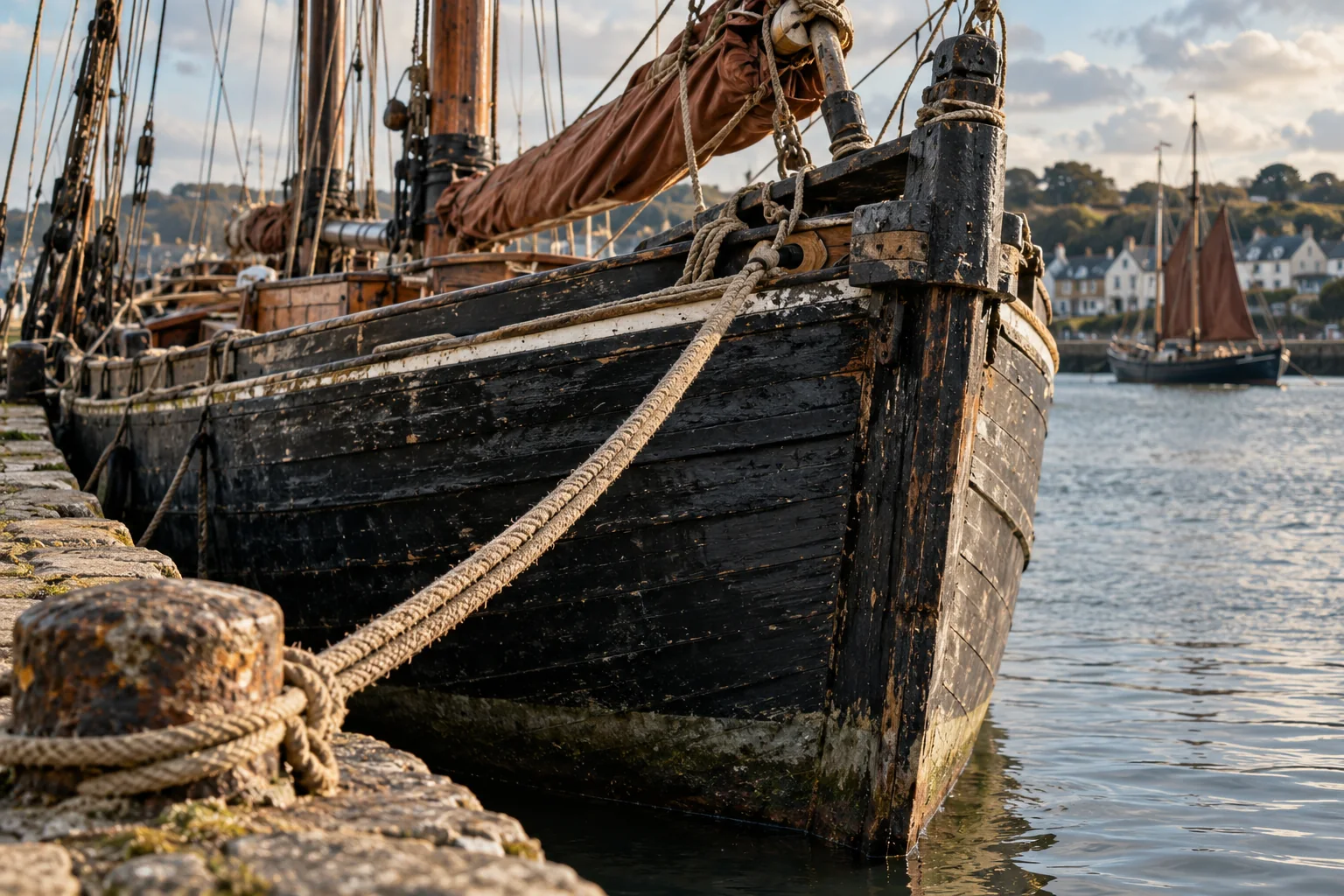
Thames barges fitted the water they worked. Their ingenuity is clearest when each feature is connected to a practical task.
A shallow hull could reach waterside places beyond the practical range of a deeper vessel. That made creeks, smaller quays and local industries part of a connected trading network. Access still depended on tide, loading and local conditions; shallow draught never meant unrestricted movement.
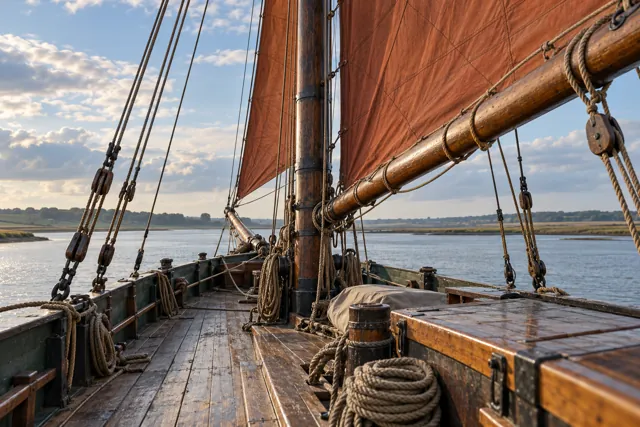
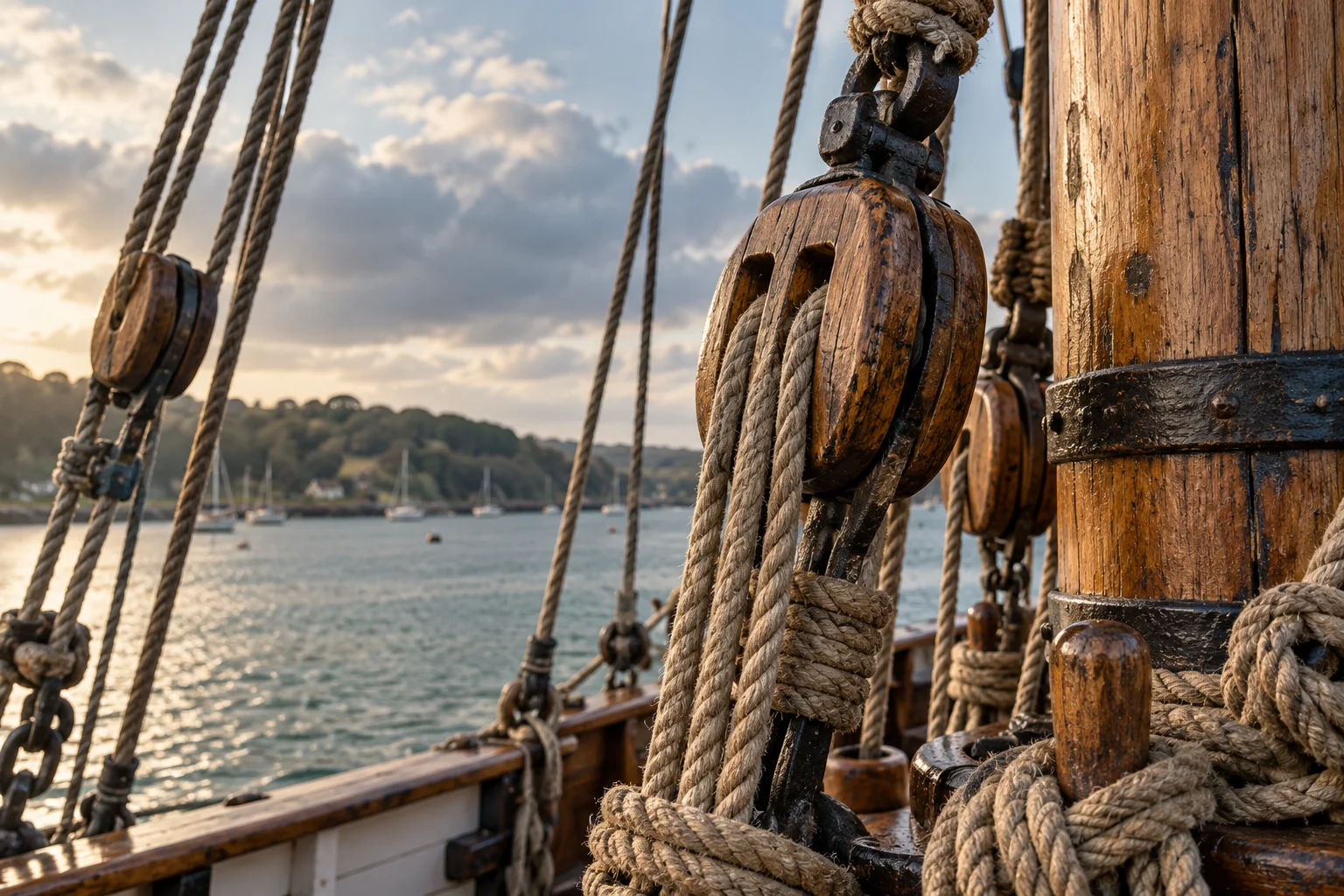
The diagonal sprit supports the characteristic mainsail. Rigging and blocks organise the forces and work involved in handling it. Small crews depended on knowledge and careful decisions; an economical arrangement did not remove the effort or responsibility of sailing a loaded vessel.
Leeboards provide underwater area to resist sideways drift, particularly when sailing towards the wind. Their ability to lift complements the shallow hull. Look at the components together and the vessel becomes readable as an integrated design rather than a collection of curious fittings.
Explore the guide to hull, rigging and life aboard for a plain-English introduction to the working parts.
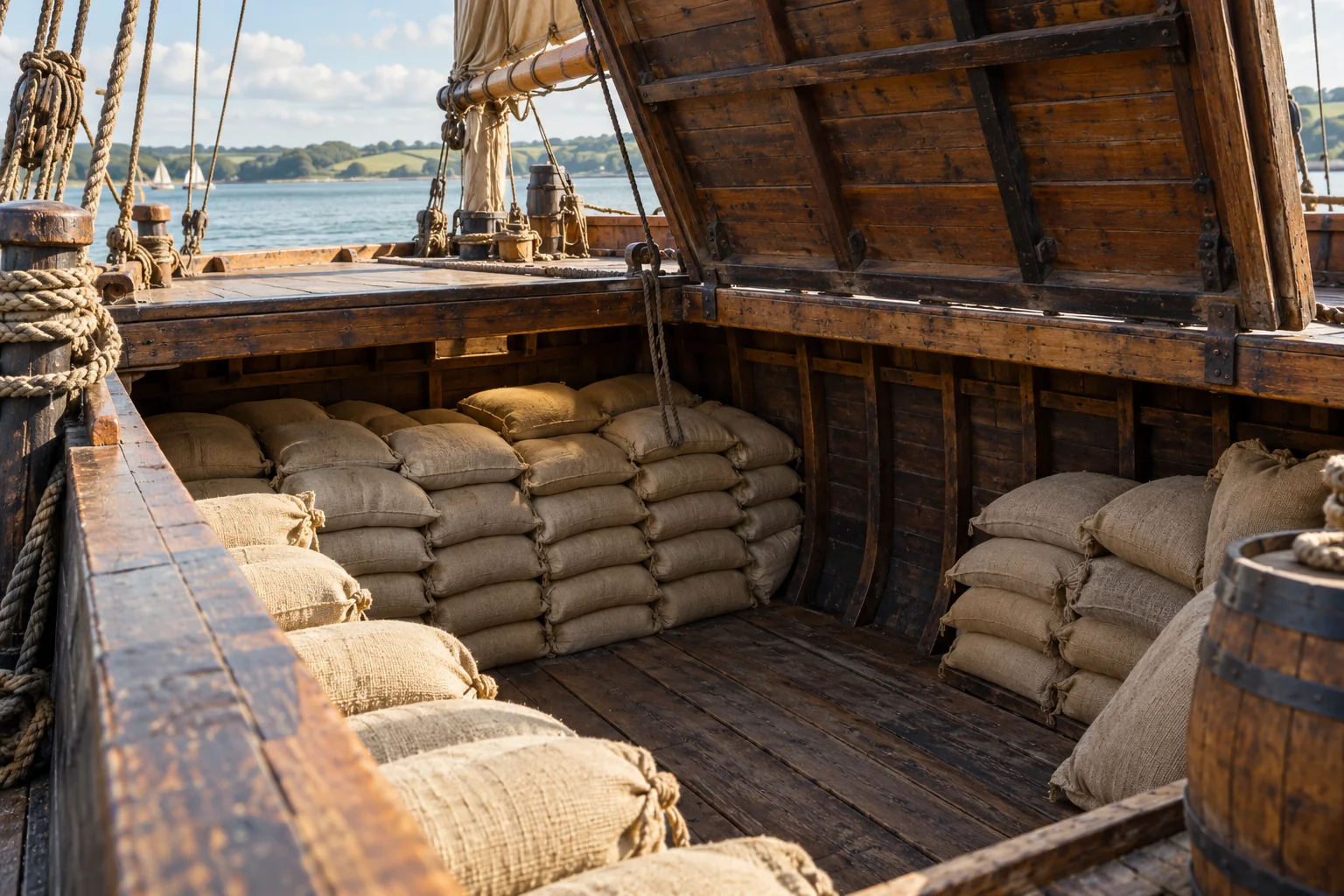
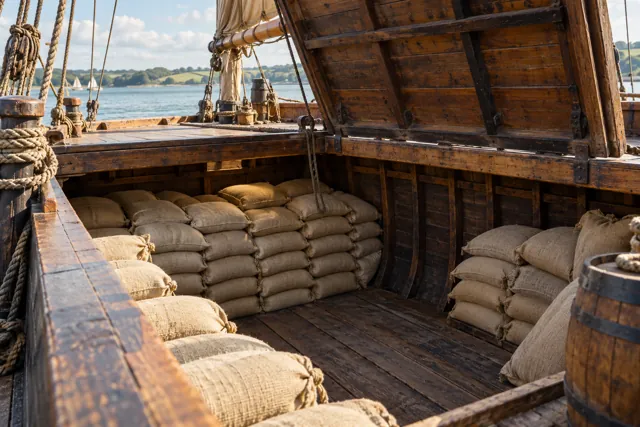
The commercial value of a barge began before she moved. Goods needed to reach the loading place, enter the hold and remain in suitable condition until delivery. A fast passage could not compensate for a poorly organised transfer or a receiver unable to accept the load.
Across the fleet, agricultural products, construction materials and industrial goods created different handling problems. Packaging, weight and sensitivity to moisture shaped how a load was prepared. These are features of the wider trade, not an assertion that Edme carried every commodity mentioned in barge histories.
A useful way to follow the process is to ask four questions: where were the goods assembled, how were they stowed, when could the vessel move and how would the receiver take delivery? The answers join land, water and labour. They also reveal why a modest creek could matter to a much larger economy.
Our cargo article follows this sequence as an explanatory model. It separates documented vessel history from general principles, so the reader can learn how the system worked without mistaking a plausible reconstruction for a recorded voyage.
Follow a cargo from quay to destination ↗Harwich, Mistley, St Osyth and Brightlingsea belong to a maritime landscape whose relationships extend beyond a single harbour.
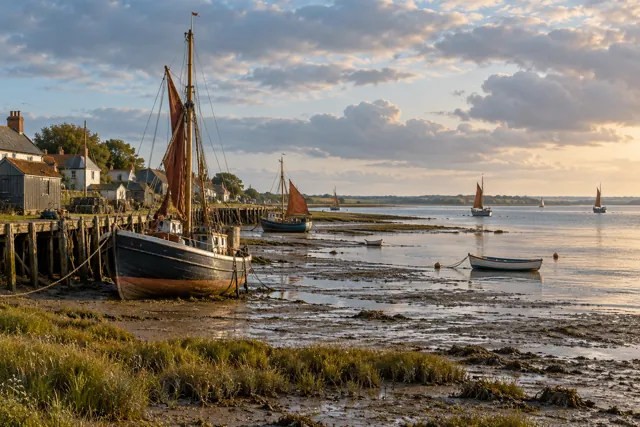
A river map tells a different story from a road map. Channels connect places across water while creeks divide journeys on land. The changing edge of a tidal estuary helps explain both the usefulness of shallow craft and the local knowledge needed to work them. Geography was an active part of the trade.
Harwich is Edme’s recorded place of construction. Mistley connects her name with industry, while St Osyth appears in her registered location and restoration history. Brightlingsea provides another entry into the wider River Colne maritime landscape. These associations should be read historically; they are not interchangeable addresses for visiting or joining the vessel.
At the waterfront, look for relationships rather than isolated landmarks: a quay beside storage space, a slipway connected to a workshop, or moorings shaped by a creek. A building’s appearance can suggest a question, but dated photographs and local collections are needed to establish its earlier use. The landscape becomes more interesting when observation and evidence work together.
Local interpretation is especially valuable here. Brightlingsea Museum and St Osyth Museum provide ways to connect maritime objects with community history. Consult their own information when planning a visit. Published history can be durable; opening times, access arrangements and exhibitions need separate confirmation.
Explore Brightlingsea and the Essex coast ↗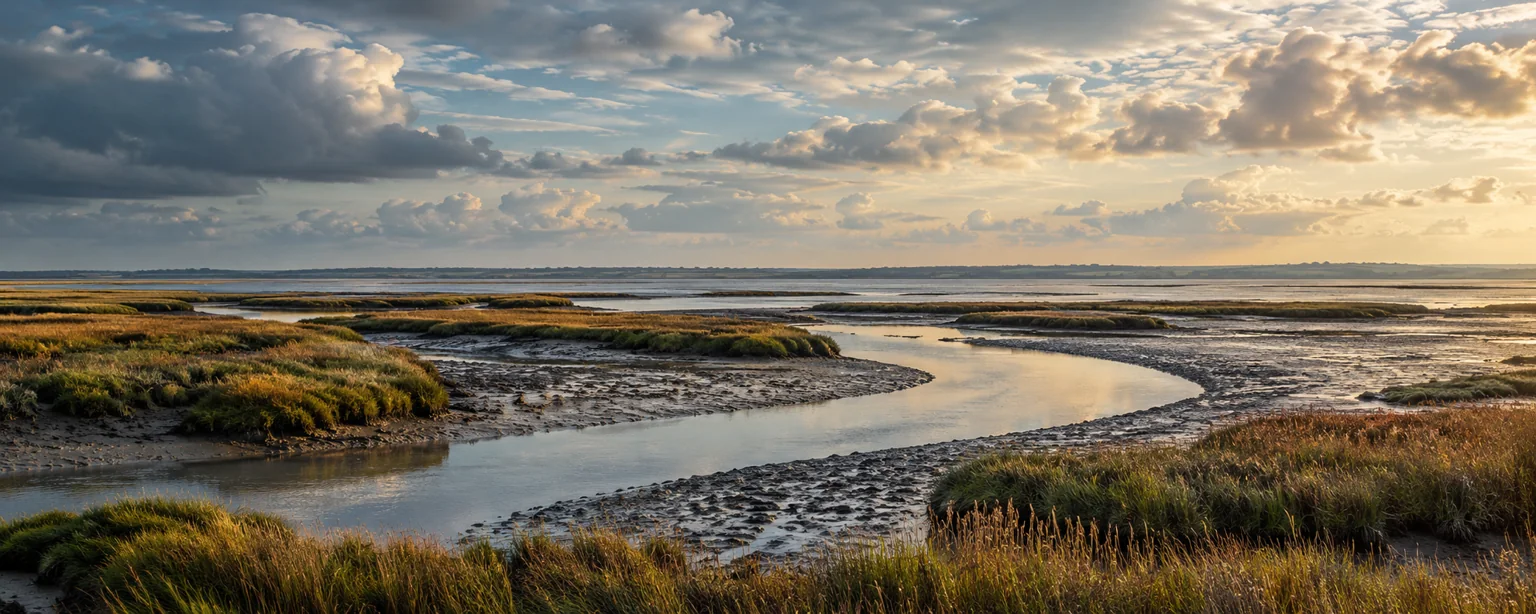
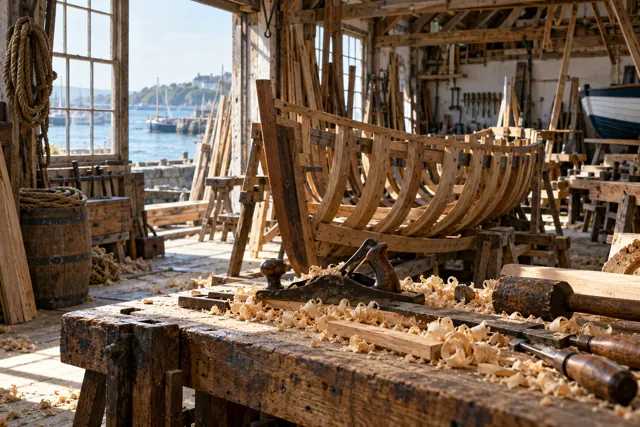
Preserving a wooden vessel is a sequence of decisions, not a single finishing date. Recording condition, understanding earlier repairs and maintaining the means to work on the hull all contribute to survival. A replaced component can sustain function, while a careful record preserves the evidence needed to understand the change.
Edme’s history includes rebuilding at Maldon and later restoration associated with St Osyth. The boatyard’s published project list records work during 1989–1992. This continuity is worth noticing: a vessel reaches each new phase carrying both the benefits and the consequences of previous interventions.
Our conservation coverage asks what a repair protects, how it is documented and which skills are needed next. It does not offer a condition survey or infer seaworthiness from an attractive photograph. The craft behind the image is as important as the image itself.
Inside the story of wooden-vessel preservation ↗Construction at Harwich establishes the starting point of Edme’s recorded history.
Her register account identifies the beginning of Ian Danskin’s rebuilding at Maldon.
St Osyth Boatyard records continuation of the restoration.
Distinct studies of the vessels, places and ideas that connected a working coast. Read one subject deeply or follow the links between them.
Discover how Thames sailing barges served coastal trade, why their design endured and how surviving vessels preserve a working maritime culture.
Follow a traditional barge cargo from quay to hold and destination, with clear explanations of tidal access, handling and freight economics.
Read the Essex coast through its creeks, working waterfronts and museum collections, with a careful distinction between heritage and visitor access.
Understand the hull, spritsail, leeboards, hatch and living spaces of a Thames sailing barge through a clear guide to their working purposes.
Explore St Osyth’s documented connection with Edme and learn how repair records, traditional skills and conservation choices preserve wooden vessels.
Compare sailing barges with powered and containerised transport, exploring handling, reliable delivery, port geography and connected freight networks.
Plan a thoughtful maritime heritage visit using ship records, local museums and public waterfronts, with a checklist for access and interpretation.
A heritage visit may mean looking from a public quay, exploring a museum, boarding a historic vessel or joining an organised sailing. Each has different arrangements. Decide which experience matters to you, then confirm it with the organisation responsible. A recorded berth is not a published departure point.
For Edme-related updates and enquiries, consult the Sailing Barge Edme Facebook page supplied for this project. Check the date of announcements and seek direct confirmation before travelling. This journal does not take bookings or guarantee sailings, accommodation or access.
A thoughtful coastal day also leaves room for weather and individual access needs. Ask about steps, gangways or below-deck routes if they affect your party. A destination’s own guidance is the best starting point; a general travel article cannot assess a particular boarding arrangement.
For a wider itinerary involving major attractions or public venues, VenueGuideHQ’s parking guides can help identify arrival questions to check. They are general planning resources, not confirmation of parking at Edme’s berth.
If an Essex heritage visit forms part of an air journey, BaggageBase’s airline baggage guides provide a starting point for understanding carrier requirements. Verify the allowance attached to your own ticket; airline baggage rules do not describe what can be brought aboard a sailing barge.
For a separate stadium, concert or ticketed event on the same trip, BagPolicyGuide’s event bag-policy guides can prompt useful checks. Always confirm restrictions with the event organiser. No policy from an unrelated venue should be applied to Edme or a maritime museum.
Selected promotional resources are labelled through their link attributes and disclosed here. They are not maritime authorities or evidence for vessel information.
Use the maritime heritage field guide ↗Use vessel records for identity, specialist resources for terminology and local institutions for place. Operational enquiries belong with the relevant owner or organiser.
Sources checked 15 October 2026. Read our editorial policy for how facts, interpretations and illustrations are distinguished.
Short answers to the questions most likely to arise when first encountering Edme and the barge tradition.
Edme is a wooden Thames spritsail cargo barge, recorded as built at Harwich in 1898. She is the historic vessel discussed by this independent publication.
National Historic Ships records sail propulsion and no engine. That historical feature does not establish any present sailing schedule or visitor service.
No. A location in a vessel record or a boatyard address does not establish where a particular sailing begins. Obtain current instructions from the organiser.
No. This is an independent heritage journal. Use the vessel’s social channel and the responsible operator to ask about current opportunities and arrangements.
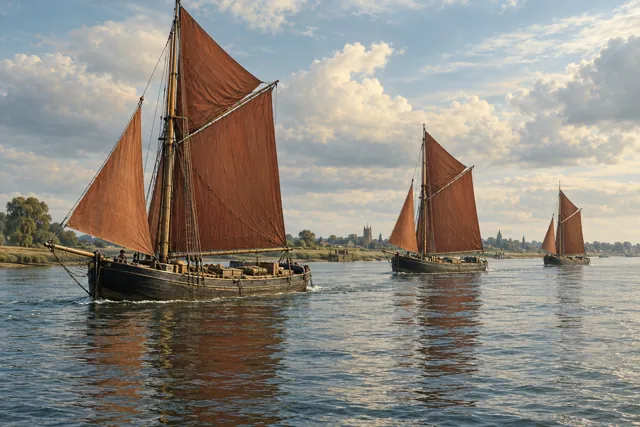
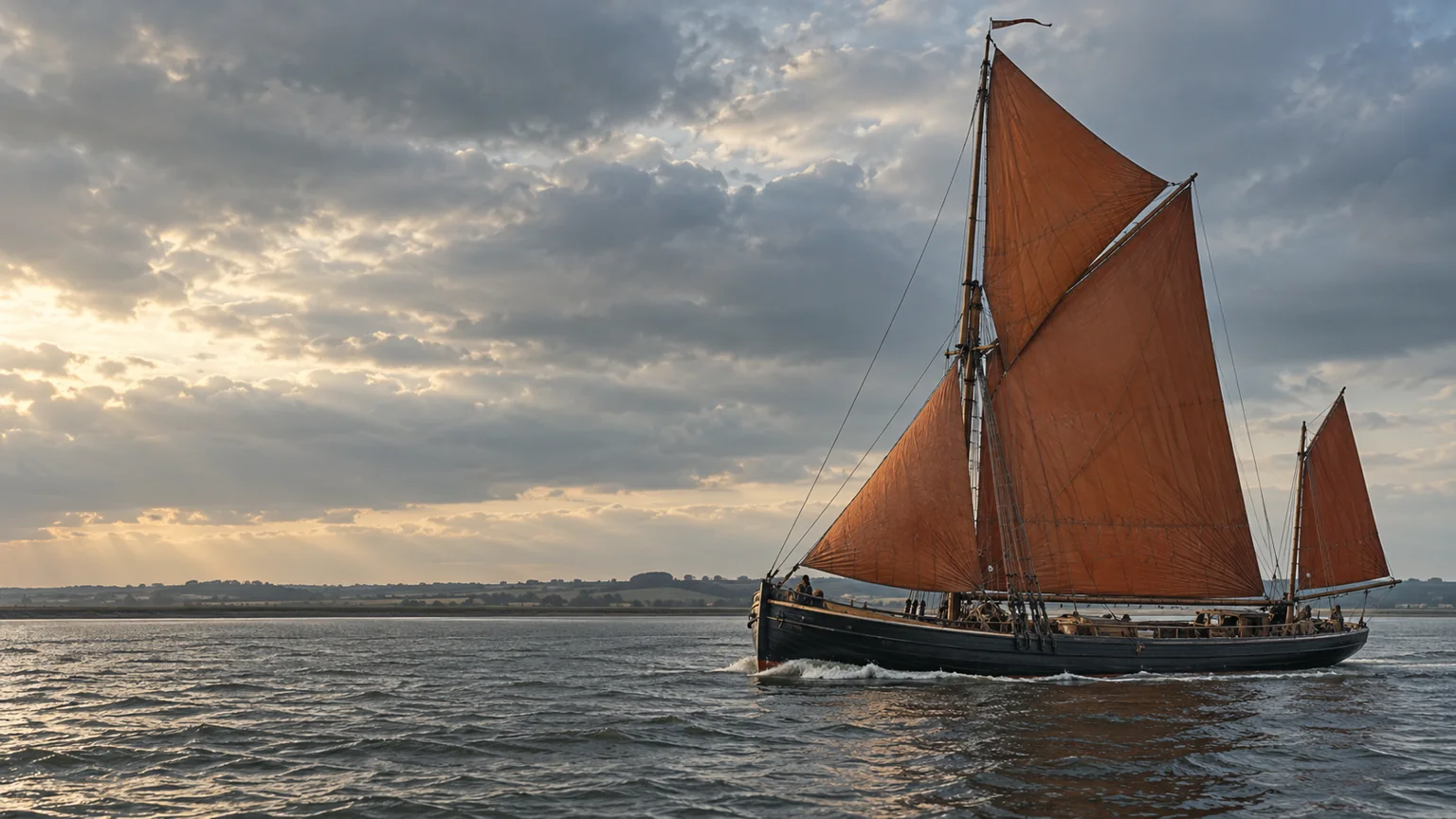
No. The site uses labelled AI-created editorial illustrations. They depict general maritime subjects and must not be used as evidence of Edme’s appearance, a real location or a historical event.
The characteristic combination includes a shallow cargo hull, spritsail rig and movable leeboards. Individual vessels and later conversions vary; the design article explains the relationships.
A hull carries more than a cargo. It carries decisions about work, material and place. Follow Edme’s story into the waterways, workshops and communities that keep British maritime heritage understandable.
Open the journal