A historic vessel survives because somebody deals with the next small problem. A seam needs attention, water gathers where it should not or a fitting conceals deterioration beneath an apparently sound surface. The visible transformation associated with a restoration is only part of the work. Continuing maintenance gives that transformation a future.
St Osyth Boatyard’s published history records work on Edme during 1989–1992, continuing an earlier restoration at Maldon. The connection provides a concrete starting point for understanding wooden-vessel preservation. The wider discussion here explains conservation principles, not a survey of Edme or a technical repair specification.
A port history and a boatyard history overlap
The boatyard’s own historical account traces the site’s port associations to 1214. That is a statement about the site, not the age of the present company, sheds or slipway. Distinguishing those layers matters whenever a business occupies a place with a much longer working history.
St Osyth Museum also discusses the boatyard and port. Read the two accounts together: one describes the working business’s inherited story, while the other places the site within local interpretation. Details can be complementary without proving that every present structure has an unbroken medieval origin.
A good site history asks what continued and what changed. Water access, land use, buildings and ownership can follow different timelines. Using one date to describe them all produces a simple story, but usually loses the relationships that make the place historically interesting.
Edme connects restoration across places
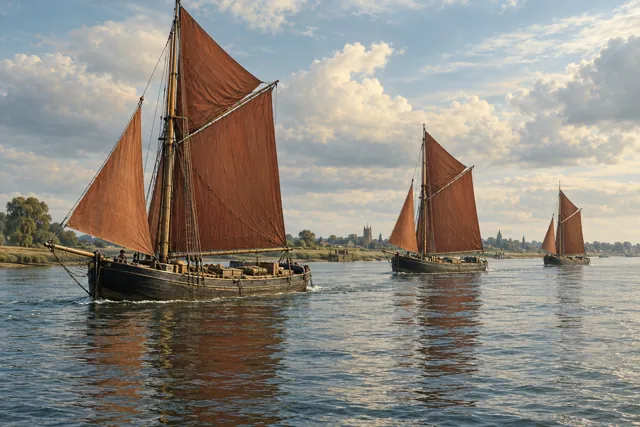
Edme’s survival is not the achievement of a single moment. Her recorded history includes different uses and a long rebuilding effort before the work listed by St Osyth Boatyard. This continuity is important because a vessel’s condition at any stage depends partly on decisions made earlier.
The yard lists several other restoration projects, including work on Thalatta. A project list establishes a documented connection; it does not, by itself, describe every method, worker or component involved. Detailed interpretation requires project records and the permission of those responsible for them.
Readers sometimes ask where a restoration truly began. The answer may depend on whether they mean purchase, recording, structural work or a return to sailing. Naming the milestone avoids an artificial disagreement between accounts that are actually describing different stages.
| Conservation activity | What it preserves | Useful record |
|---|---|---|
| Condition assessment | Understanding of present problems | Dated observations and survey findings |
| Repair | Serviceable fabric where feasible | Before-and-after detail and method |
| Replacement | Function or structural continuity | Reason, dimensions and material |
| Skills transmission | Ability to continue the work | Training and documented practice |
Record before removing material
Documentation is part of conservation rather than an administrative step after it. A component may preserve information about dimensions, tool marks, joints and previous repairs. If it is removed without a record, its physical replacement cannot automatically recover the evidence that disappeared.
Useful recording can include written observations, measurements, photographs and drawings. Each answers different questions. A close photograph may show surface detail but not establish scale; a drawing may explain an arrangement while omitting texture. Together, records allow later readers to understand the basis of a decision.
National Historic Ships UK publishes guidance on recording, conserving and deconstructing historic vessels. These are distinct activities, which is itself instructive. Keeping a ship afloat is not the only possible heritage outcome, and a physical intervention should be understood against an explicit conservation purpose.
Timber repair involves judgement
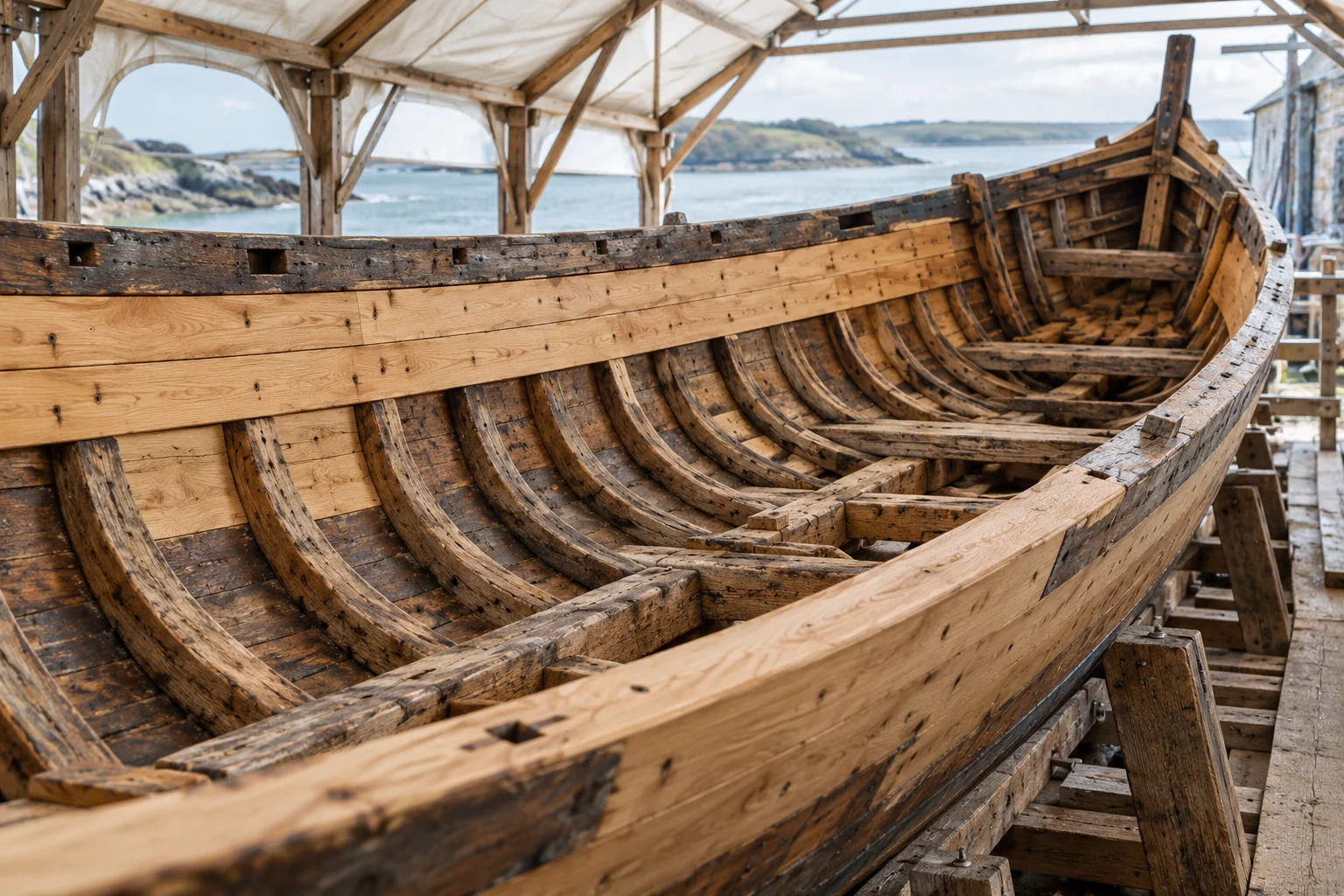
Wooden construction presents a continuing relationship among material, moisture, fastenings and movement. A defect can affect more than the piece where it first appears. Understanding how components interact is therefore more useful than treating a visible plank as an isolated object.
The choice between retaining, repairing and replacing material depends on condition and the intended use of the vessel. Public interpretation can explain that judgement without pretending a photograph is a professional assessment. Advice appropriate to a displayed object may differ from work needed on a vessel that goes to sea.
Caulking, fitting planks and shaping structural members are skilled practices. Their historical interest lies partly in knowledge that cannot be fully conveyed through a list of tools. Demonstration and supervised training help preserve that knowledge, while records explain why a particular approach was chosen.
Original material is only one measure
The question ‘how much is original?’ sounds precise but needs a definition. Original to launch, to a later trading phase or to a significant conversion? A working vessel may have required replacement during its commercial career long before it became a conservation project.
That does not make material history unimportant. It makes documentation more important. Identify what a surviving component demonstrates and how later work is distinguished. A dated alteration can be evidence of changing work, while a faithful replacement can help sustain the intelligibility of the whole vessel.
The aim is not to make every new surface look artificially old. Nor is it necessarily to return the vessel to one imagined perfect date. A conservation plan needs to explain which values are being protected and how unavoidable change will be managed.
Preserve skills and the conditions for using them
A shipwright needs more than individual skill: suitable space, access to tools and materials, time and a viable working setting. A boatyard is therefore part of maritime heritage in its own right. Losing the conditions for repair can weaken the prospects of several vessels at once.
This is one reason a photograph of a finished hull tells only part of the preservation story. The workshop, supply relationships and records are less conspicuous but help make future work possible. Interpreting them directs attention from a single restoration reveal to continuing stewardship.
Support should follow the needs of the actual project. Volunteering, donations or visits may be welcome in some settings and unsuitable in others. Check the organisation’s own information rather than assuming an active workplace can accommodate unscheduled participation.
Separate public interest from public access
A historic yard can be fascinating without being a walk-in attraction. Plant, moving vessels and repair work create an environment different from a museum gallery. Follow the site operator’s arrangements and do not interpret an address as an invitation to board a vessel.
For St Osyth Boatyard, use the yard’s own contact page to ask about a relevant enquiry. Mill Street, St Osyth, Essex, CO16 8EW is its published address; it is not the editorial office of this journal. Vessel visits and departures need their own confirmation.
If an opportunity to see work is offered, ask questions about process: how a condition was recorded, what was retained and what future maintenance is anticipated. Those enquiries produce a deeper understanding than judging preservation solely by the gloss of a finished surface.
The broader lesson is that survival is a continuing practice. Edme’s documented restoration connection with St Osyth places one historic hull within that practice, while the yard’s wider record shows why maritime heritage depends on working places as well as vessels. Preserving the story means keeping both in view.
Reader questions
Was Edme built at St Osyth?
Her recorded builder was John and Herbert Cann of Harwich. St Osyth is associated with later restoration and her registered location.
Is the boatyard a maritime museum?
It is a working boatyard. Public interest in its history does not establish general visitor or vessel access.
Does replacing timber remove all historical value?
No. Value also depends on documented structure, use, design and continuity. Replacement decisions should be recorded and explained.
Continue exploring: From Sail to Modern Logistics: How British Maritime Transport Evolved, or return to Edme’s documented story.