A good maritime visit does not require a famous ship. An ordinary quay, a local collection or a small working vessel can explain how a community met the water. The visit becomes more rewarding when you know what you are looking for and which source can answer the questions that arise.
To explore British maritime heritage, combine a documented vessel or collection with its geographical setting, then verify visitor arrangements directly. The destinations below are research starting points rather than a timed itinerary. Access, vessel location, admission and activities must be checked for the date of travel.
Choose a question before a destination
Start with an interest narrow enough to investigate. How did cargo reach a small creek? How does a sail support system work? What changed when a trading ship became a heritage vessel? A question gives structure to looking without requiring specialist knowledge beforehand.
It also helps choose between experiences. A museum collection may explain a historical process more clearly than a distant vessel seen from shore. A public waterfront may communicate scale and tidal geography better than a small display. The strongest plan often combines complementary forms of evidence rather than collecting attractions.
Keep expectations proportionate. A single visit cannot establish the full history of a ship or town. It can identify useful sources, reveal a physical relationship and suggest a more precise next question. Those are valuable outcomes even without boarding a vessel.
Use registers for identity and history
The National Historic Ships register is a useful starting point for a named vessel. It separates information such as builder, construction, propulsion and recorded service. Read the fields carefully and distinguish a summary of historical significance from operational information.
Edme illustrates why this matters. The register, a specialist barge profile and boatyard history can support an account of her construction and restoration. They should not be combined into an invented promise about a future sailing. A record’s authority in one subject does not automatically extend to another.
Names can recur and spellings can vary. When researching a vessel, compare builder, date, dimensions and any identifying numbers rather than matching a name alone. Preserve the exact source reference in your notes so another reader can retrace the identification.
| Before you go | Question to resolve | Best source |
|---|---|---|
| Choose the experience | View, board, study or sail? | Destination or organiser |
| Check identity | Which vessel or collection? | Register or catalogue record |
| Confirm access | Does the route suit your needs? | Current destination information |
| Make travel plans | Where and when should you arrive? | Specific booking or venue confirmation |
| Record responsibly | May you photograph or quote? | Staff guidance and collection conditions |
Let collections explain what you cannot board
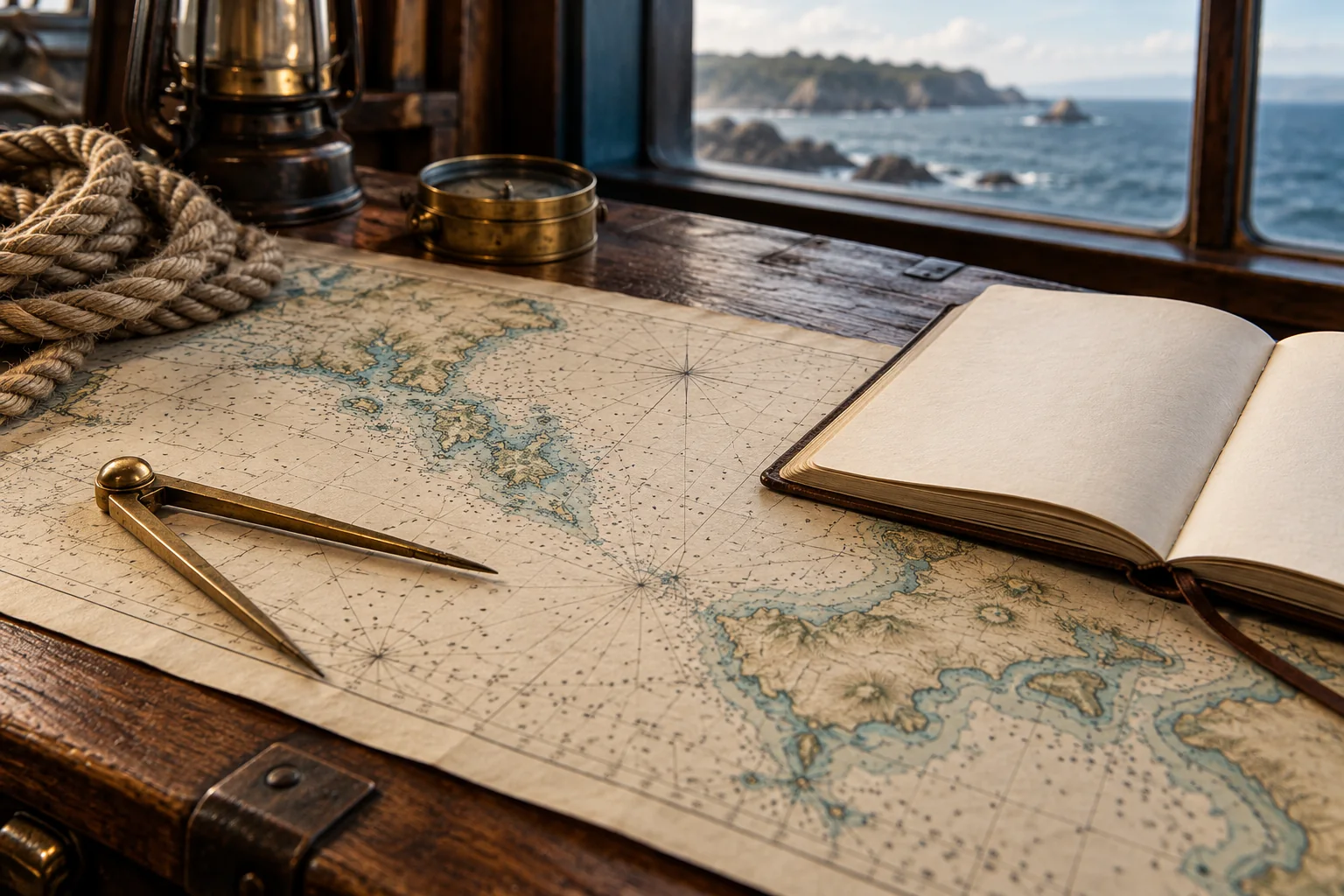
Royal Museums Greenwich provides access to maritime collections and research material. An online object record can already teach useful habits: identify what the object is, when it was made and what its accompanying description actually claims. A model and a photograph are different forms of evidence.
Local museums offer another scale of interpretation. Brightlingsea Museum connects a particular coastal community with its past. St Osyth Museum’s material on the port and boatyard provides a further way into the Essex working landscape. These are complementary resources, not substitutes for confirming current access.
Before travelling, select two or three objects or subjects to investigate. Avoid turning the visit into a search for everything mentioned online. Exhibitions can change and some material may be held in stores. If access to a specific item is essential, ask the institution beforehand.
Read a public waterfront as a connected place
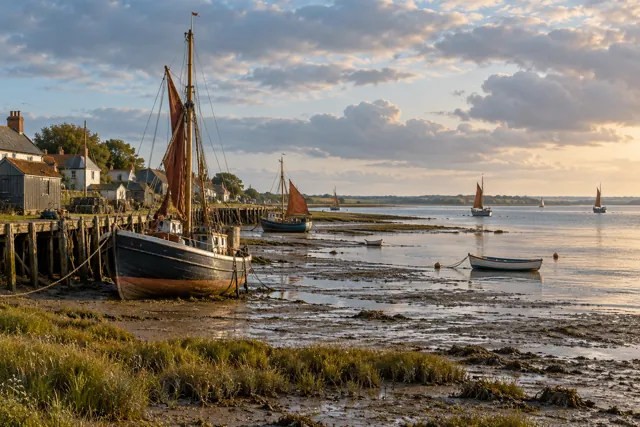
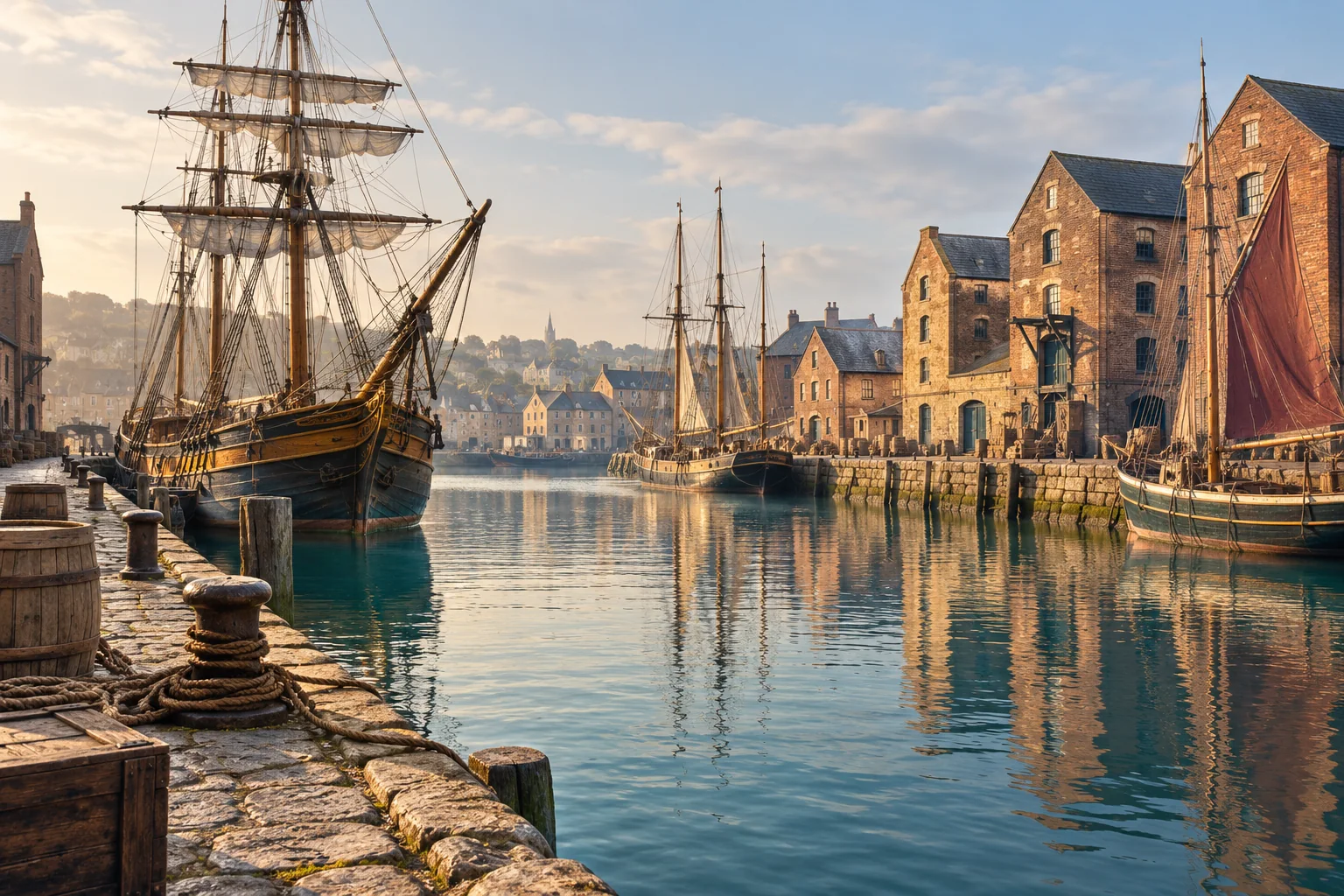
At a lawful viewpoint, look beyond the most attractive vessel. How does the quay meet the water? Where could goods have waited? Are there signs of a slipway, lifting position or former storage building? These features suggest questions that local records may help answer.
Separate visible evidence from inference. You may observe a robust mooring fitting without knowing its date. A warehouse-like building may have served another purpose. Record what you can see, then use published interpretation or archival material to test the explanation.
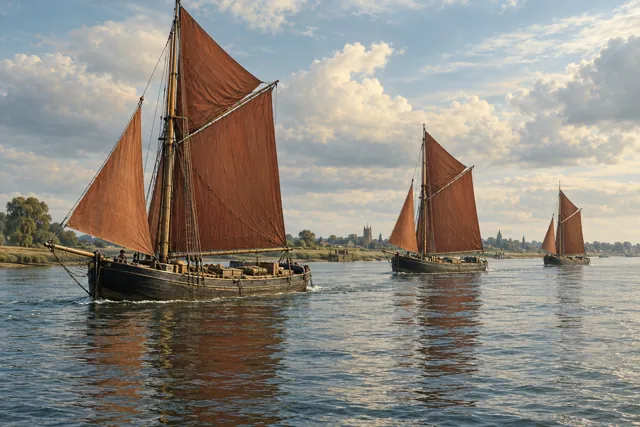
The Society for Sailing Barge Research identifies places associated with seeing barges, including Maldon, Faversham and St Katharine Docks. Treat such lists as leads. They are not guarantees that a particular vessel will be present, open or available on the day you arrive.
Confirm the experience you actually want
A vessel visible from shore, a museum admission and an organised sailing trip are different experiences. They have different access requirements and may be provided by different organisations. Decide which one matters to your party before making travel arrangements.
Ask precise questions. Does the visit include boarding? Is there a gangway or a steep ladder? Can the organiser describe access for your needs? Where is the meeting point for the specific date? A berth address and a departure location should never be assumed to be interchangeable.
For Edme enquiries, consult the vessel’s social channel and the relevant operator information. This journal is independent and cannot confirm bookings. Avoid sending an editorial correction to a boatyard simply because the yard appears in an article; enquiries should reach the organisation responsible for the subject.
Prepare for the setting
Historic waterfronts can involve exposed weather, uneven surfaces and routes that change between public and private areas. Use the destination’s own guidance to decide what is appropriate for your visit. A general heritage article cannot assess the conditions of a gangway or a working deck.
Carry only what you need for the experience and confirm any entry restrictions directly with the organiser. If the day forms part of a longer journey, check transport baggage rules separately. Requirements for an airline, a museum and a vessel are not interchangeable.
Build flexibility into the plan. An indoor collection can complement an outdoor visit when conditions are poor, but verify that it is open rather than assuming it provides a fallback. A thoughtful alternative preserves the purpose of the visit, not merely the number of stops.
Keep an evidence notebook
A useful note contains a subject, source, date and question. If photography is permitted, capture a wider view as well as a detail so the fitting or object remains identifiable. Copy a catalogue reference accurately; do not rely on remembering the appearance of a display.
When somebody offers a recollection, retain the context and ask before recording or quoting. A personal account can be illuminating without becoming a universal statement about maritime life. Written records and oral history can support each other while preserving differences in perspective.
Afterwards, revisit one uncertainty rather than attempting a complete history immediately. Finding a dated plan or identifying an unfamiliar term turns the visit into continuing research. Sharing accurate notes is more useful than circulating a confident caption that cannot be checked.
Support the work that makes visits possible
Conservation, cataloguing and interpretation require resources. Use an institution’s own information if you want to donate, volunteer or take part. The right contribution depends on the actual project and available arrangements; enthusiasm alone does not make unscheduled workshop access appropriate.
Respecting boundaries is also a form of support. A working vessel may need maintenance rather than visitors on a particular day, and a museum may need advance notice for a research enquiry. Recognising those needs keeps heritage from becoming simply a backdrop to a photograph.
The most lasting souvenir is often a better way of seeing. A rig becomes a system, a quay becomes a transfer point and a vessel’s restoration becomes an ongoing set of decisions. Begin with one question, verify the arrangements and let the evidence deepen the journey.
Reader questions
Can I assume a registered historic vessel is open to the public?
No. Registration describes heritage significance and recorded details. Public access is a separate matter.
Is a waterfront address always the departure point?
No. Confirm the meeting place and departure details for the particular event or booking.
What is the best first research source?
For a named vessel, begin with a register entry; for a local community, start with its museum. Use both when the question connects ship and place.
Continue exploring: The History of Thames Sailing Barges and Britain’s Coastal Trade, or return to Edme’s documented story.